Long stays · The economics
Serviced Apartment vs Hotel for a Long Johannesburg Stay
What changes in the maths, and in daily life, once a stay stretches past a week or two.
Where the maths starts to shift
A hotel's nightly rate is built for one or two nights: it bundles in daily housekeeping, a restaurant on-site, and a rate structure that assumes you're not cooking. None of that is useful once you're staying for two, four, or twelve weeks — you end up paying for services you don't use while eating out for every meal, which adds up fast. Serviced apartments price differently: nightly rates are often similar or slightly higher up front, but weekly and monthly rates drop meaningfully, and a working kitchen removes the single biggest hidden cost of a long hotel stay.
Put roughly: three meals a day eaten out, every day, for two weeks, can easily add up to more than the accommodation itself costs over that period. Self-catering breakfast and a couple of dinners a week — while still eating out plenty, just not by default — cuts that food spend dramatically without feeling like a sacrifice, which is really where the apartment model earns its value over a longer stay.
What actually changes in daily life
- Cooking versus eating out. Even modest self-catering — breakfast and the occasional dinner — meaningfully cuts the daily cost of a long stay compared with a hotel where every meal is a restaurant bill.
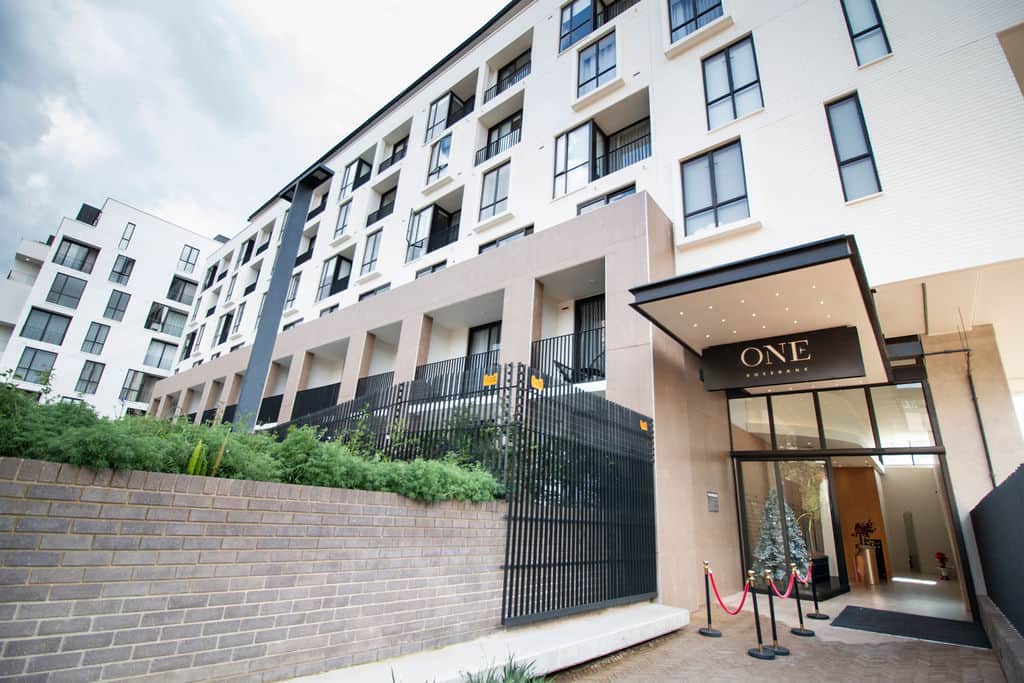
- Laundry. A hotel either charges per item or expects you to find a laundromat. An apartment with its own washing machine — which One Rosebank has — removes this entirely.
- Space to actually live in. A separate living area from the bedroom matters more than it sounds like it should once you're working from the same room you sleep in, night after night. Serviced apartments are also typically noticeably larger in floor area than an equivalent hotel room, simply because they're built around living rather than sleeping.
- Routine. Knowing which supermarket, which pharmacy, which walk to the station — this builds faster in an apartment in a real neighbourhood than in a hotel designed around short stays.
- Fewer interruptions. No daily housekeeping knocking mid-call, and no need to clear out of the room for a few hours while it's serviced — a small thing on a two-night trip, a real quality-of-life difference over a month.
What a hotel still does better
This isn't a one-sided comparison. A hotel wins on pure convenience for very short stays: no groceries to think about, a 24-hour front desk for anything that comes up, and — if that matters to your travel program — loyalty points and a consistent global brand standard. If you're changing flights overnight or staying two nights for a single meeting, none of the apartment model's advantages have time to kick in, and the hotel's simplicity wins outright.
When an apartment clearly wins
Past roughly a week, the case for an apartment gets steadily stronger: the per-night cost drops with length of stay, the kitchen starts paying for itself, and the lack of daily housekeeping (usually offered on request instead) stops feeling like a loss and starts feeling like privacy. For a single night changing flights, a hotel is still simpler. For anything from a fortnight up — a project, a relocation, a long visit — the apartment model tends to win on both cost and comfort.
There's also a less obvious factor worth naming: a stay that runs past two or three weeks starts to test your wellbeing as much as your budget. Cooking a real meal instead of another takeaway, having a proper living room to sit in rather than a bed and a desk, and building a small daily routine — a regular coffee spot, a grocery run, a walk to the station — all make a genuine difference to how sustainable a long stay away from home actually feels, separate from what it costs.
Ask about the length-of-stay rate directly. Some hosts only apply their best weekly or monthly pricing if you book that way from the outset, rather than retroactively extending a short booking — so it's worth stating your likely length of stay upfront rather than booking night by night and hoping for a discount later.
How the case changes by length of stay
- 1–3 nights. A hotel usually wins on simplicity — there's no time for the kitchen or the neighbourhood routine to pay off.
- 4–13 nights. This is the genuine crossover zone. An apartment starts to make sense, particularly if you're working during the day and want somewhere to actually live in the evenings.
- 2–4 weeks. An apartment is clearly the better economic and quality-of-life choice for almost everyone at this length, assuming weekly or monthly pricing is booked correctly from the start.
- A month or more. At this point it's less a comparison and more just where you're temporarily living — ask specifically about longer-stay rates, since many hosts have a further discount tier beyond their standard monthly rate.
Questions worth asking before you book
- Does the nightly rate drop automatically past 7 and 28 nights, or only if booked that way from the start?
- Is a washing machine included, or is laundry an extra service?
- Is Wi-Fi uncapped and fast enough for video calls, not just email?
- What's the policy if the trip needs to extend or shorten partway through?
If the stay is specifically for work, our companion guide to corporate accommodation in Rosebank covers the billing and invoicing side of booking a longer business stay.
Quick facts
Once you've decided to stay longer, see our companion guide to settling in — groceries, laundry and everyday life in Rosebank.

Stay in Rosebank
Put yourself at the centre of it.
Stay at One Rosebank with Aurea Via — a serviced apartment base close to Johannesburg's business, dining, transport and lifestyle destinations.