Getting around · Gautrain
Rosebank Gautrain Guide
Everything you need to use the station confidently: where it is, how tickets work, and what the schedule actually looks like.
Where the station is
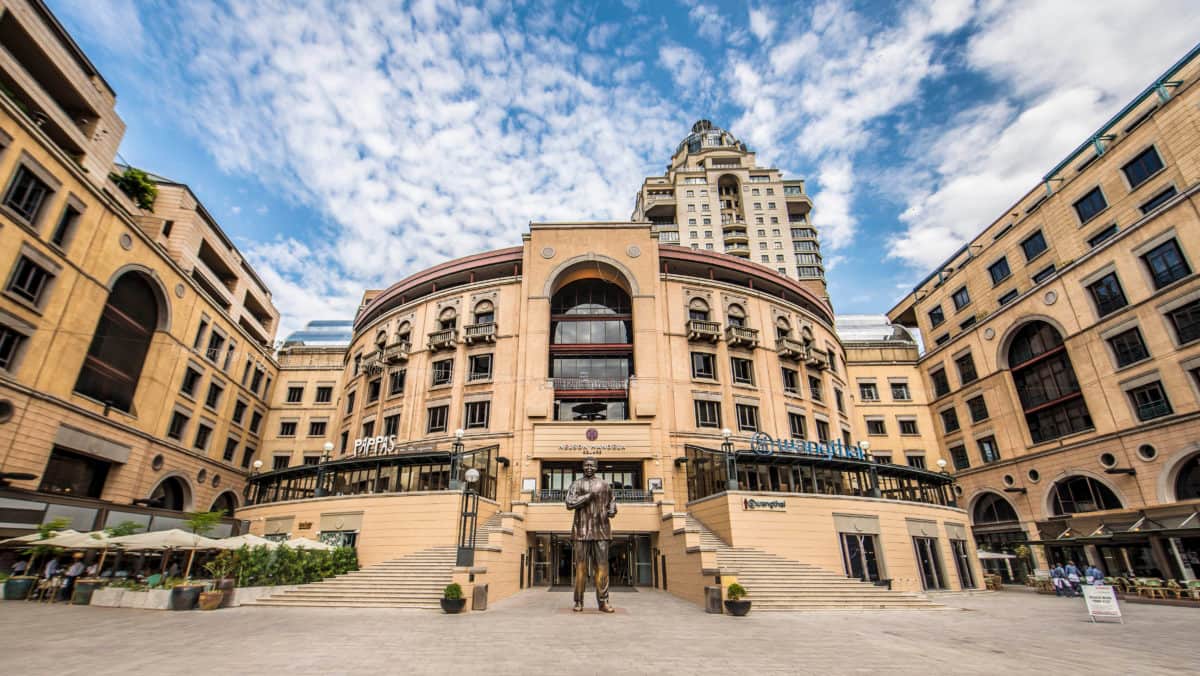
Rosebank station is underground, beneath Oxford Road, between Baker Street and Tyrwhitt Avenue — directly opposite The Zone @ Rosebank and a short walk from Rosebank Mall and The Firs. From One Rosebank on Cradock Avenue, it's an easy walk of well under ten minutes through the Zone's pedestrianised precinct; you don't need a car or a rideshare to reach it. The entrance is unmistakable once you're in the precinct — look for the station's signage at street level opposite the Zone's main entrance, with escalators and lifts leading down to the platforms.
The station sits on the Gautrain's North–South line, which runs between Park Station in central Johannesburg and Hatfield in Pretoria, calling at Rosebank, Sandton, Marlboro, Midrand and Centurion along the way. For O.R. Tambo, you'll change trains at Sandton — Rosebank itself isn't a direct airport stop, which is covered in detail in our separate Rosebank to O.R. Tambo guide. Rosebank also has its own multi-storey parking facility with 24-hour security, if you're driving in from elsewhere and joining the network here rather than walking from a nearby stay.
A little history
The Gautrain isn't old by rail standards — it opened its first phase between O.R. Tambo and Sandton in June 2010, timed for that year's FIFA World Cup, with the wider North–South line including Rosebank following in August 2011 as part of the second phase. It was built and is still operated by the Bombela Concession Company under an agreement with the Gauteng provincial government, and it remains the only rapid rail system of its kind in South Africa — designed from the outset around punctuality, security and a standard noticeably different from the country's older commuter rail network. That newer pedigree is part of why the system feels the way it does: consistent signage, camera coverage throughout, and stations built more like small transit hubs than traditional train platforms.
How tickets and tapping in/out work
Gautrain runs on a tag-in, tag-out system rather than fixed-price tickets: you tap a card as you enter the platform and again as you leave at your destination, and the fare is worked out automatically from the distance you've travelled and the time of day. To enter the paid area at all, your card needs a minimum balance loaded — currently around R38 — so it's worth checking your balance before you commit to a journey rather than discovering a shortfall at the gate.
You have two broad ways to pay. A Gautrain Gold Card is a reusable, five-year-valid smart card available from ticket machines and staffed ticket offices at any station. It has two separate "sections": a Purse for ordinary pay-as-you-go travel, and a Period Pass section that holds Weekly or Monthly products. Alternatively, most routes accept a supported contactless bank card directly at the fare gates for pay-as-you-go travel — convenient if you don't want to carry a separate card, though note that Weekly and Monthly train products can only be loaded onto an actual Gautrain Card, not a bank card.
Beyond simple pay-as-you-go, Gautrain sells a few different product types depending on how often you're travelling:
- Single Trip Product — one journey between two pre-selected stations, priced at the peak rate regardless of when you actually travel. Useful if you know your exact route in advance and want price certainty.
- Return Trip Product — the same idea, covering a there-and-back journey between two chosen stations.
- Weekly Product — 10 single trips between two pre-selected stations, which must be activated within 7 days of purchase and then used within a set window after activation.
- Monthly Product — 44 single trips between two pre-selected stations, on the same activate-then-use structure, aimed squarely at daily commuters doing the same route.
Weekly and Monthly products only cover the train itself — feeder bus trips and parking are billed separately from your card's pay-as-you-go balance, even if you're using a period product for the rail leg.
Fares change from time to time, and pricing also varies by time of day, so we've deliberately left exact rand amounts out of this guide. Gautrain's own fare calculator at gautrain.co.za always reflects current pricing for your exact route, and it's genuinely worth a two-minute check before a trip rather than assuming last year's number still applies.
Schedule and frequency
Trains and the connecting feeder buses run daily from roughly 05:30 to 20:30, though the exact first and last departure differs slightly by station and direction — Rosebank's own first weekday train southbound tends to leave in the early hours of the morning, well before most business travellers are up. Within the daily window there are three different patterns to be aware of: weekday peak, weekday off-peak, and a separate weekend and public-holiday timetable.
- Weekday peak — roughly 06:00–08:30 in the morning and from the mid-afternoon into early evening. Trains run most frequently here, but peak-time fares apply and platforms are busiest.
- Weekday off-peak — outside those windows, trains typically run about every 20 minutes, with lower fares than peak.
- Weekends and public holidays — a single all-day timetable applies, generally every 20 minutes on the Sandton–O.R. Tambo leg and a broadly similar pattern on the North–South line.
Because the published times shift slightly as Gautrain adjusts the timetable, it's worth checking the live schedule on the Gautrain app or website for the exact next departure rather than relying on a fixed time from memory. The app is also useful for something less obvious: it shows real-time train arrival countdowns per station, so you can time your walk from the apartment rather than arriving at the platform to wait.
One rule worth knowing if your trip involves a transfer or parking: Gautrain allows a maximum of 60 minutes between tagging out of one part of the system and tagging into the next — for example, between leaving the train and exiting the car park. Take longer than that and a non-rail-user parking fee can apply, even if you did travel by train.
Accessibility and safety
The system was designed with accessibility as a core requirement rather than an afterthought: wheelchair access is provided at every station, on every train, and through every fare gate, with lifts alongside escalators throughout. Stations also include tactile guidance and warning surfaces, high colour-contrast signage, non-slip flooring, and both visual and audible announcements for arrivals and departures — useful details if you're travelling with reduced mobility or a visual impairment, or simply navigating an unfamiliar station for the first time.
On safety, Rosebank station — like the rest of the network — operates with visible security staff, comprehensive camera coverage, and controlled access between the unpaid and paid areas. It's one of the more reassuring ways to move around Johannesburg precisely because that security is built into the design rather than added on.
Practical tips
- Keep your card topped up. A minimum balance is required before you can tag in, and running short mid-trip is an easy way to get caught out.
- Build in a buffer at peak times. Morning and late-afternoon trains are noticeably busier, and it's worth allowing a few extra minutes to reach the platform.
- Use the feeder buses for the last mile. Gautrain's Midibuses and Gaubuses connect Rosebank to nearby suburbs like Hyde Park, Illovo, Parkhurst and Melrose Arch on weekdays, using the same card as the train.
- Children under 3 travel free when carried or accompanied, and children under 12 need to be accompanied by an adult at all times — useful to know if you're travelling with a family.
- Keep your card for the whole trip, including parking. Using the same Gautrain Card for train, bus and parking is what unlocks the discounted rail-user parking and bus rates — paying separately for each loses that benefit.
- A lost or damaged card can be replaced at any ticket office for a small fee, and any Period Pass or Purse balance registered to your card can usually be transferred across, so it's worth registering your card rather than keeping it anonymous.
Quick facts
Stay in Rosebank
Put yourself at the centre of it.
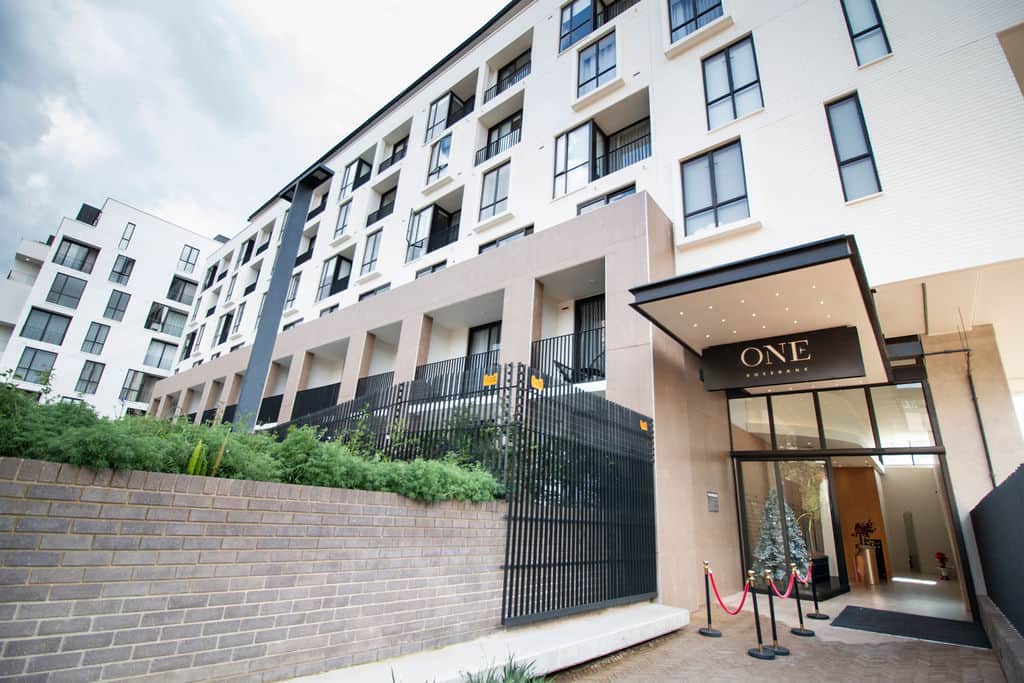
Stay at One Rosebank with Aurea Via — a serviced apartment base close to Johannesburg's business, dining, transport and lifestyle destinations.